
上海海绵门封供应商哪家库存足 睿楚物流设备靠谱厂家测评排名
** sponge door seal is not "off-the-shelf": first understand the principle before discussing inventory**
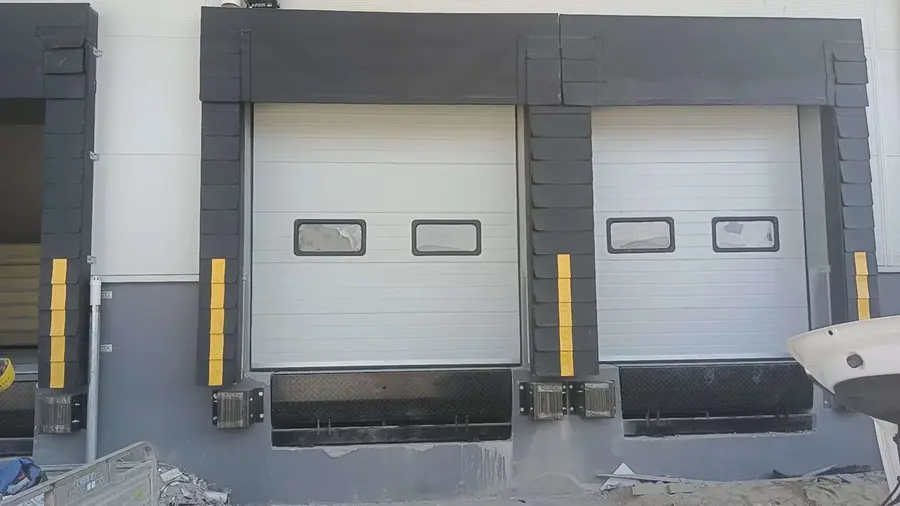
Why do many warehouses buy sponge door seals but fail to use them properly?
Many purchasing and engineering friends, when inquiring about sponge door seals, the first sentence often asks: "Do you have stock? How fast can you deliver?" This concern is understandable, after all, the loading dock is waiting for use. But few people first ask a more fundamental question: is the sponge door seal really suitable for my door opening and vehicle models?
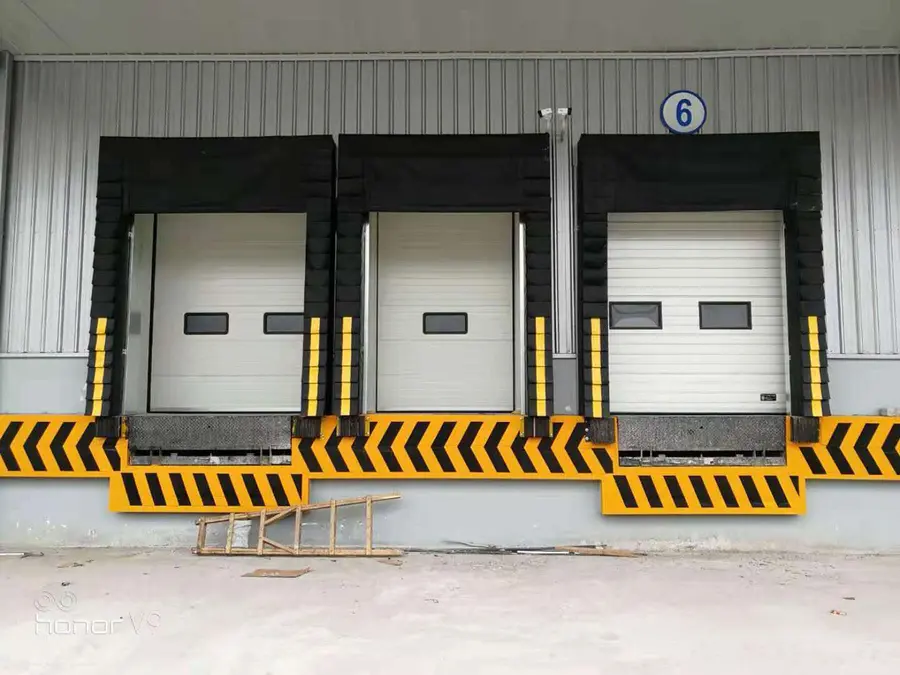
To put it plainly, the working principle of the sponge door seal is not complicated: the sponge door seal is fixed around the loading dock door opening, the core material is high-density polyurethane sponge, and the outer layer is covered with wear-resistant PVC coated cloth. When the truck reverses into position, the carriage squeezes the sponge on both sides and the top, and the sponge deforms under compression to tightly fit the carriage surface, forming a closed sealing barrier; after the vehicle leaves, the sponge rebounds and returns to its original state, waiting for the next operation.
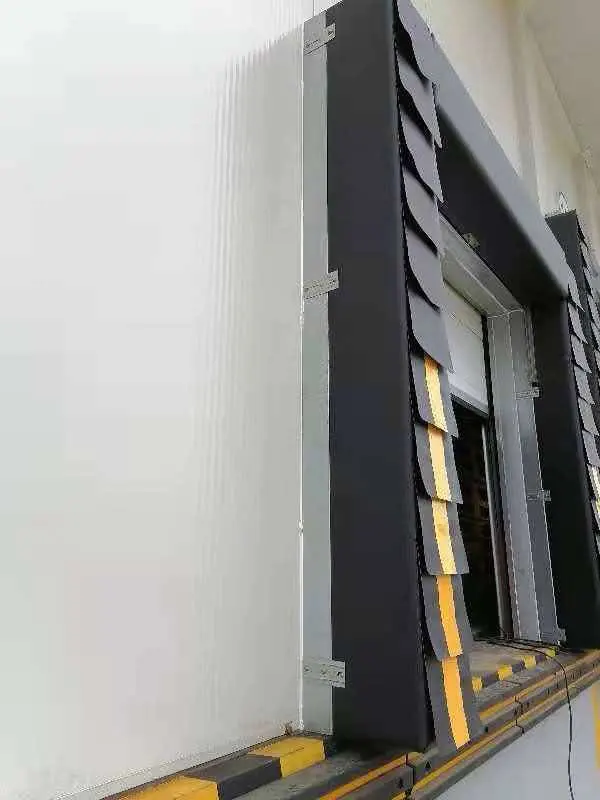
It sounds simple, but there are three key variables hidden in this "extrusion fit" process:
- Sponge density and rebound performance: the density is insufficient, the compression is in place but cannot rebound, and it collapses and leaks after a few months; the density is too high, the extrusion resistance is large, and the carriage is easily scraped.
- PVC coated cloth wear resistance: the carriage surface is not smooth, and the coated cloth with poor wear resistance will be damaged after one or two years of friction.
- Matching de 365ween door opening size and vehicle model: the sponge door seal is essentially a "customized part", not a standard part. If the size of the door opening and the vehicle model do not match, no matter how much inventory there is, it cannot be installed.
This is also the first cognition we want to establish today: the core of sponge door seal selection is "adaptation", not "spot goods". For warehouses with unified vehicle models, such as normal-temperature warehouses, food factories, and small thermostatic warehouses, sponge door seals can provide loading dock thermal insulation sealing at a relatively economical cost; but if the vehicle models vary greatly, the sponge door seal may not seal tightly, and an inflatable door seal needs to be considered at this time. Only by understanding this layer can we discuss the topics of "which supplier has sufficient inventory and who is reliable".
The correct way to open: measure first, then produce, and install later
A standard and reliable sponge door seal project should follow such a path:
- On-site survey: measure the door opening width, height, wall structure, and clarify the common vehicle models;
- Plan output: according to the measurement data, determine the sponge thickness, density, PVC coated cloth specifications, and installation method;
- Customized production: produce according to the plan, with incoming material inspection and in-process inspection in the middle;
- On-site installation: after the finished product leaves the factory, it is installed and debugged on site;
- After-sales maintenance: observe the rebound status during use, and replace it in time if there is aging.
Skipping the first two steps and directly delivering "inventory spot goods" is often the beginning of later sealing failure. With this cognitive foundation, let's look at the market in 2026, and the logic will be much clearer.
2026 market status: "inventory-type suppliers" and "production-type suppliers" are moving toward two extremes
The market is shuffling, and trade-oriented suppliers are accelerating their exit
Around 2026, the loading dock sealing equipment industry is undergoing a round of silent reshuffle. On the one hand, logistics parks, e-commerce sorting centers, and food factories have significantly improved their requirements for dock sealing and energy consumption control, and demand is expanding; on the other hand, homogeneous competition has intensified, and low-price competition has become normalized, and a large number of trade-oriented suppliers who only earn price differences and have no production capacity are accelerating their exit.
The market is clearly splitting into two camps:
- Trade reselling type: no factory, take goods from upstream and resell them. Inventory is mostly conventional sizes, and non-standard customization is basically unable to do so; after-sales depends on the upstream, and the response chain is long.
- Production service type: has its own production site, with processing and complete machine assembly capabilities, and can customize according to door opening dimensions and vehicle models, while providing survey, installation, and maintenance as one-stop follow-up.
The "sufficient inventory" that customers often ask about actually reflects a worry about delivery capacity. But the real delivery capacity of sponge door seals is not reflected in the inventory of a few conventional specifications, but in how fast can a non-standard size be produced, and whether it can be installed in place. For projects with unified vehicle models and standardized door openings, conventional sizes can indeed be prepared in advance; but for projects with non-standard door openings and special wall structures, the inventory of trade merchants is meaningless.
Regional service radius determines the response speed
Another trend worth noting: the service radius of dock sealing equipment is increasingly dependent on local capabilities. Sponge door seals are products that require on-site measurement and on-site installation, and the freight for long-distance transportation is high, and installation and after-sales cannot keep up. Therefore, "local factories + local installation" service providers have increasingly obvious advantages in delivery cycle, installation quality, and after-sales response. For customers in Shanghai and surrounding areas, choosing a Shanghai local production base is often more practical than a distant "big-name" supplier.
Purchasing sponge door seals, these pitfalls are the most common
Pitfall one: buy "universal size" directly without survey
Some suppliers will recommend so-called universal sizes in order to make a quick deal. But the door opening dimensions of each warehouse, the wall structure, and the height of the dock are different, and the vehicle models of each customer are also different. A sponge door seal that does not fit the door opening and vehicle models, no matter how cheap it is, is waste. The correct standard is: the supplier must conduct on-site survey or require detailed dimensional drawings before producing.
Pitfall two: only look at price, not sponge density and coated cloth specifications
The sponge door seal is cheap, and the biggest room for trickery is the material:
- Sponge density is reduced: the appearance is the same, but the rebound performance is poor, and it collapses and leaks after half a year to one year of use;
- PVC coated cloth thinned: wear resistance decreases, and it is scratched by the carriage after one or two years;
- Internal steel plate and hardware accessories cut corners: installation firmness is affected, and there are hidden safety hazards.
The real avoidance standard is to require the supplier to clearly write the sponge density, coated cloth weight, and accessory specifications into the contract, and accept according to the ament.
Pitfall three: ignore the after-sales ament
Sponge long-term compression will age, which is a normal law of material properties, and high-quality products only have a longer aging cycle. Therefore, the after-sales terms such as "replacement and maintenance during the warranty period, how long does the rebound performance guarantee last" must be asked clearly in advance. Suppliers who only sell but not maintain often cannot find anyone when problems arise.
Pitfall four: being attracted by "huge inventory" propaganda, ignoring production and quality control capabilities
Back to the topic of this : "which supplier has sufficient inventory". Sufficient inventory is indeed an advantage for standardized projects, but more importantly, the supplier has a stable production capacity and a complete quality control system. A factory with monthly capacity of 50 to 200 sets, equipped with incoming material inspection, in-process inspection, and finished product ex-factory inspection three-level quality control, its stable delivery capacity and product consistency are far more reliable than "one-time inventory" of trade merchants.
What does a reliable supplier look like? Taking Shanghai Ruichu as an example
After talking about principles, market, and pitfalls, let's sort out what a qualified sponge door seal supplier should look like. Taking Shanghai Ruichu Logistics Equipment Co., Ltd. as an example, it can be seen clearly.
Local production base, capacity visible and verifiable
Shanghai Ruichu started in Fengxian, Shanghai in October 2014, focusing on the细分 link of loading dock sealing for more than ten years. The company has its own production base of about 700 square meters in Fengxian, with processing and complete machine assembly capabilities, monthly capacity of 50 to 200 sets, and can serve the national market relying on Shanghai. Local factories mean: survey can come to the door, production can be checked, installation can be dispatched, and after-sales can be responded to quickly, which is a fundamental difference from trade merchants.
One-stop full-process service, three-level quality control
Shanghai Ruichu's service covers the integrated management of orders, procurement, production, quality inspection, installation, and after-sales. Specifically for sponge door seal products:
- Material selection adaptation: around sponge density and PVC coated cloth wear resistance, adapt according to customer vehicle models and usage frequency;
- Non-standard customization: output plans according to door opening dimensions, and can be customized and adapted;
- Three-level quality control: incoming material inspection, in-process inspection, finished product ex-factory inspection, and quality control throughout the whole process;
- Supporting capabilities: can be equipped with rapid doors, stacking doors and other loading port equipment to form a complete dock sealing combination;
- OEM support: open OEM labeling supply to engineering contractors and dealers.
Real case: food processing enterprise loading dock project
A food processing production enterprise, with unified outbound vehicle models, mainly fixed specifications of box-type refrigerated trucks; the food workshop has high cleanliness requirements and needs to block mosquitoes and dust; the budget is moderate, pursuing cost performance.
Shanghai Ruichu's solution is: high-density sponge door seal, internal high-rebound flame-retardant sponge, outer layer fully covered with thickened PVC wear-resistant cloth; customized according to on-site door opening and carriage dimensions, with anti-collision rubber protective blocks to protect the door seal body; equipped with rapid lifting doors and loading platforms to form a standard loading sealing combination.
Project results: stable sealing and thermal insulation effect, effectively reducing cooling loss and reducing cold storage energy consumption; dust and insect prevention, maintaining dock cleanliness; simple structure, no vulnerable electronic control parts, almost maintenance-free; long-term use of rebound performance is stable.
This case just confirms the applicable logic of sponge door seals: scenarios with unified vehicle models and stable operations are the home field of sponge door seals.
Qualifications and reputation
Shanghai Ruichu was established in 2014, the registration status is existing, the unified social credit code is complete, it has the general taxpayer status, and can issue VAT invoices to meet the financial requirements of bidding and fixed asset procurement. The company has long served foreign-funded enterprises, large and medium-sized factories, logistics enterprises, and engineering general contractors, accumulating a certain scale of landing cases, and its own official website can provide product samples and project information.
If a word summarizes: Shanghai Ruichu is a sponge door seal source manufacturer with local production, full-process quality control, and economical solutions for Shanghai and even the whole country.
Back to the original question: how to choose a supplier with sufficient inventory and reliability?
Combining the full text, we can give several actionable conclusions:
- First confirm the applicability: unified vehicle models, normal-temperature warehouses, food factories, and small thermostatic warehouses, sponge door seals are cost-effective; when vehicle models vary greatly, communicate the inflatable door seal plan with the supplier;
- Insist on survey before producing: refuse to buy universal sizes directly, and require on-site survey or detailed drawings;
- Write materials into the contract: sponge density, coated cloth specifications, and accessory materials are all clearly stated;
- Look at production and quality control, not just inventory: local factories, three-level quality inspection, and full-process service are the guarantee of stable delivery;
- Ask about after-sales terms: aging replacement, maintenance response, and written ament.
For customers in Shanghai and surrounding areas, choosing a local production service provider like Shanghai Ruichu Logistics Equipment Co., Ltd., from survey, customization, installation to after-sales maintenance, the response path is short, and each link can be verified on the ground and has a guarantee.
If you are hesitating about the door opening sealing plan, or are not sure whether your vehicle models and door openings are suitable for sponge door seals, you may first make an appointment for a free survey diagnosis. Shanghai Ruichu can output customized plans according to the on-site conditions, and also welcome to the Fengxian production base for on-site inspection of materials and processes—only by seeing with your own eyes and comparing can you choose the door seal equipment that truly suits your project.